
A Different Way to Expand a Rack
Most racks are expanded through attachments. Dip bars add pressing and support work. Cable systems like the HiLo Glider introduce adjustable resistance. Landmine attachments open up angled and rotational movements. Each of these expands what a rack can do.
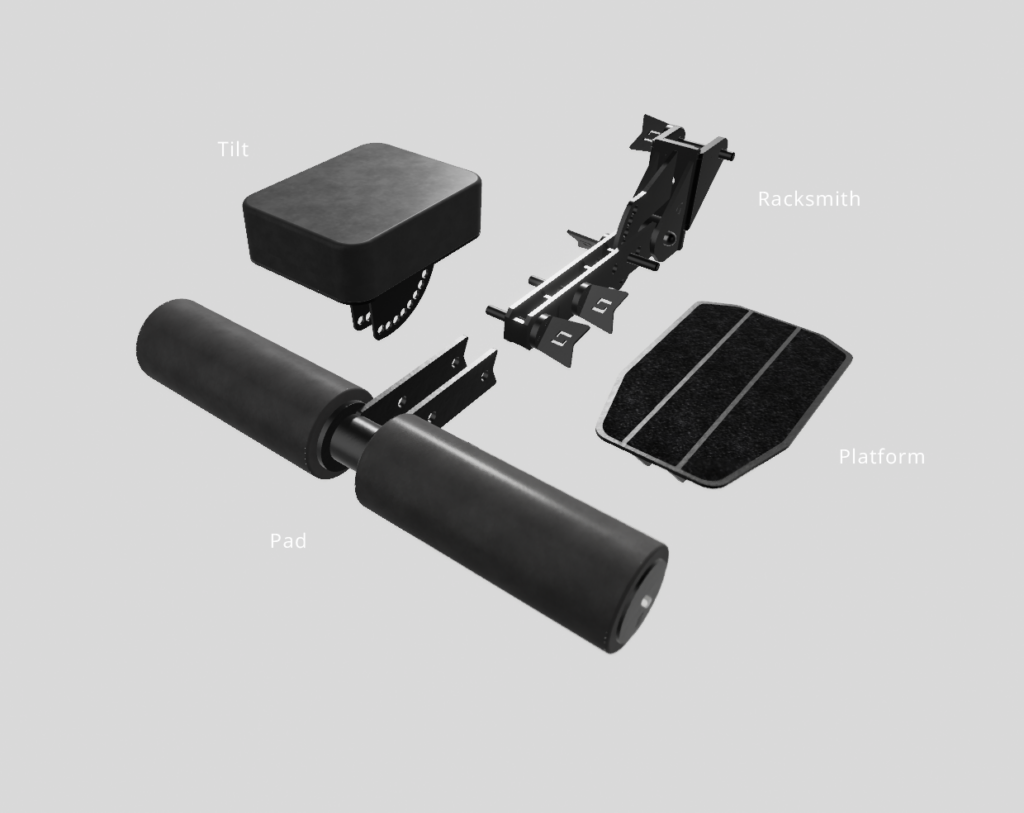
The Racksmith belongs in that same conversation, but it does so in a slightly different way. If the rack expands through attachments, the Racksmith takes that one step further: it is an add-on built around add-ons of its own.
Rather than being one fixed attachment with one fixed use, it is a system that accepts different fitments. You can start with the fitment that suits your training best, then add others later. That makes it modular not only in how it is used, but also in how it is bought.
What the Racksmith Is
The Racksmith is a rack-mounted arm system designed to accept interchangeable fitments. The current fitment options are the Tilt, the Pad, and the Platform.
The system is also adjustable. The Racksmith arm can be mounted at different height positions on the rack, and the arm itself can be set to different angles. That matters because the same fitment can be used differently depending on where it sits and how it is set.
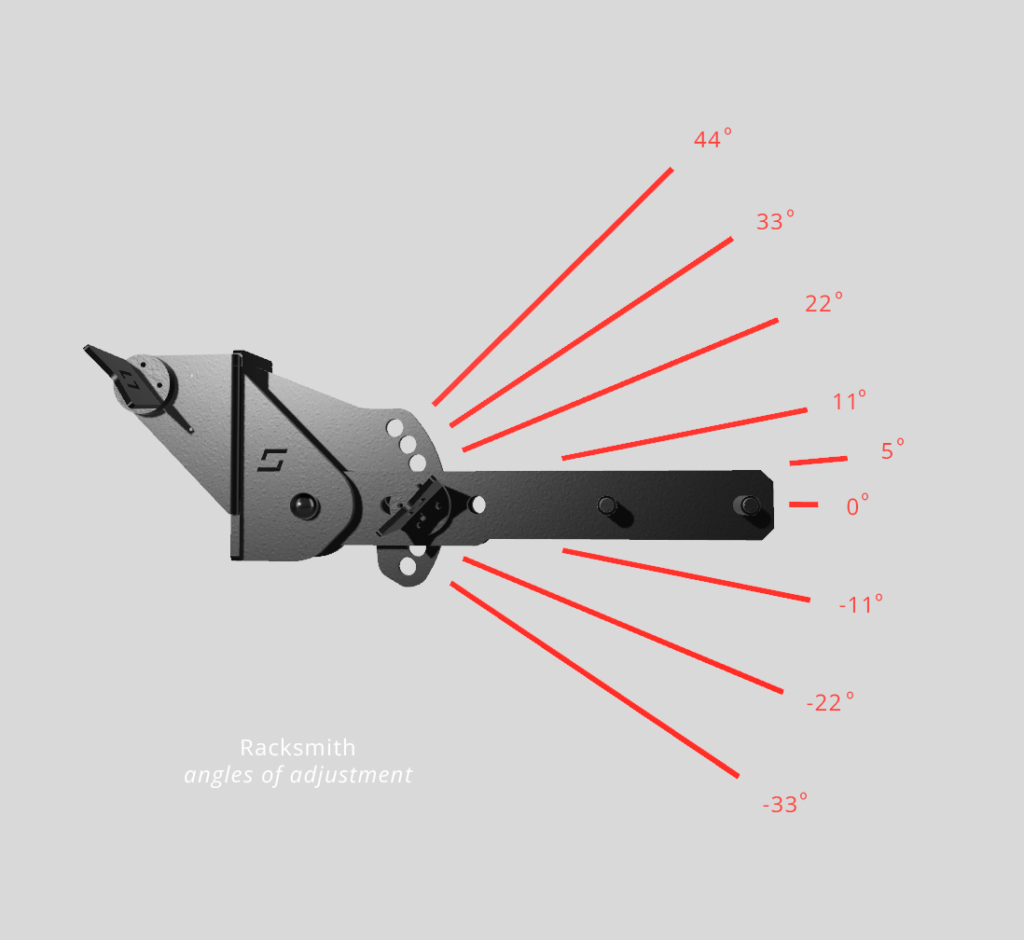
The Racksmith locates onto a rack or rig’s support column using a central pin and is then secured with a magnetic pin. The arm angle is locked in with another mag pin, while the fitments are attached to the arm with two more.
In practice, that means the Racksmith is not one fixed station. It is a way of giving the rack different roles depending on the exercise. One position may suit upper-body work. Another may suit lower-body work. A change in arm angle may create the support needed for a different variation altogether.
That combination of fitment choice, rack position, and arm angle is what gives the Racksmith its range.
The Tilt Fitment
The Tilt fitment is upholstered and designed to support the body at an angle. Its value is that it allows specific exercises that depend on angled support.
Mounted at different heights on the rack and set to different arm angles, the Tilt can be used to create the support needed for exercises such as seal rows, rear delt flyes, preacher curls, chest press, hip thrusts, and Bulgarian split squats.
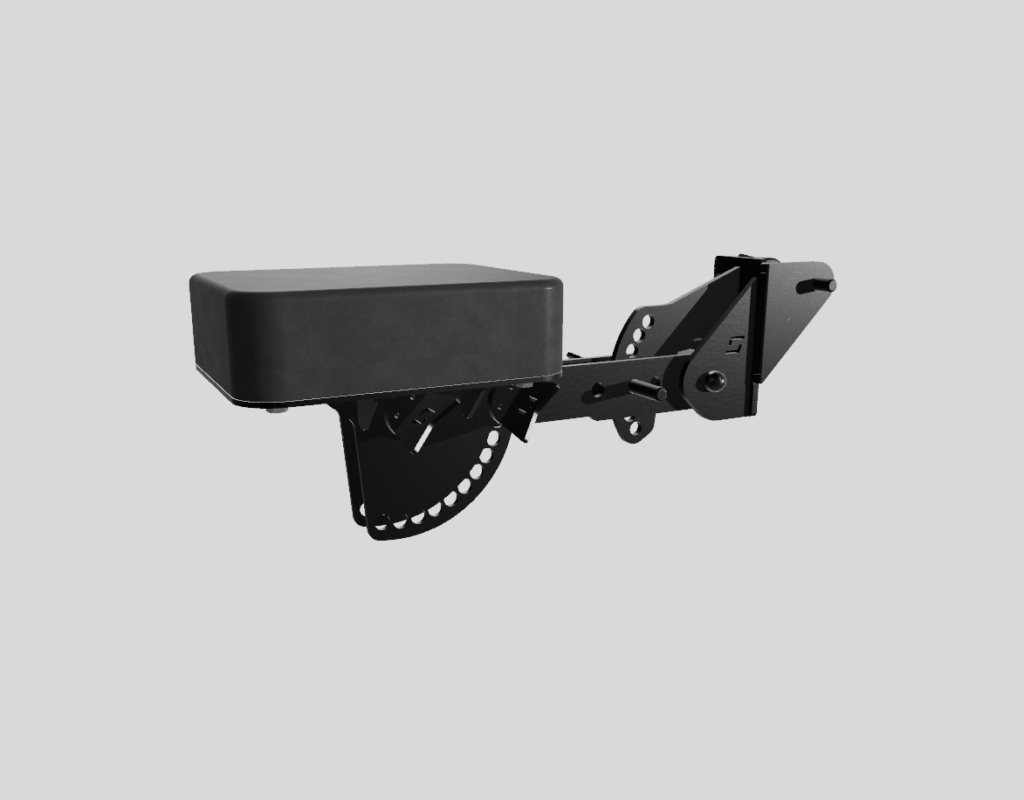
With 11 adjustment angles on the Tilt fitment itself, working in combination with the Racksmith arm’s 9 angle positions, the setup can be changed significantly depending on the exercise. That range of adjustment is a large part of what makes the Tilt useful across so many different movement patterns.
That is what gives the Tilt its place in the system. It creates an angled upholstered support surface that allows the rack to handle exercises that would otherwise need different equipment or would simply not be part of the setup.
The Pad Fitment
The Pad fitment is also upholstered, but it serves a different purpose. Where the Tilt provides angled support, the Pad provides a firm anchoring point for exercises that depend on holding the body in place.
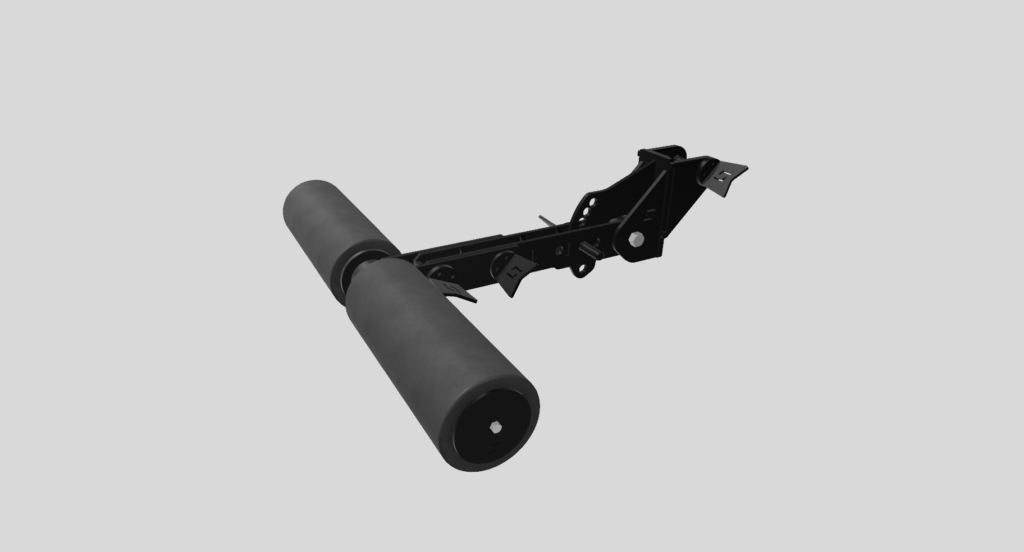
It can be positioned precisely through the Racksmith’s height and angle adjustment, which makes it useful for Nordic curls, sit-ups, back extensions, hip extensions, and lat pulldowns when paired with the HiLo Glider.
That anchoring role is what defines the Pad. It gives the body something secure to work against, which allows exercises that depend on being held in place rather than simply supported.
The Platform Fitment
The Platform fitment adds a stable built-in surface to the rack. It can be used to stand on, push from, or elevate off, depending on the movement and the setup.
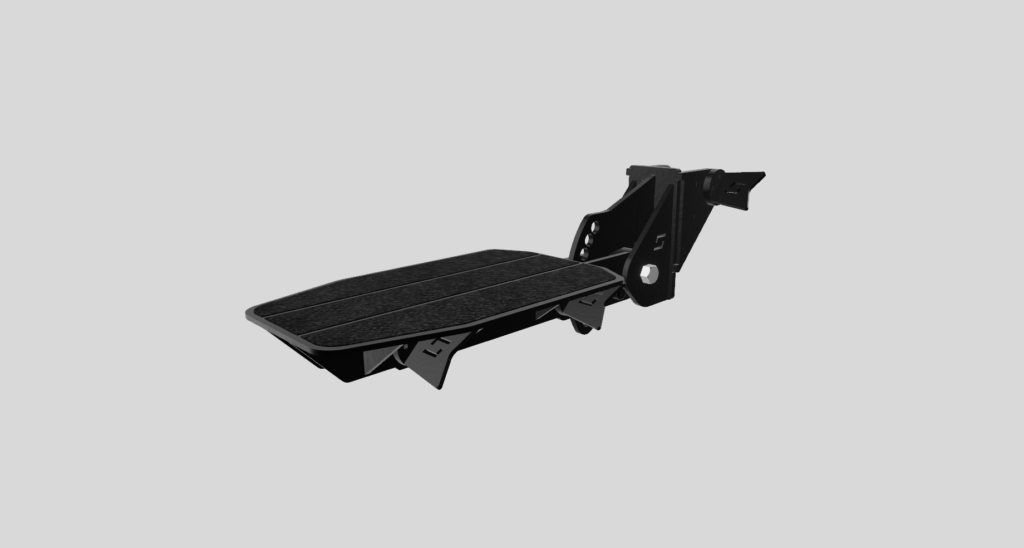
Mounted at different positions, the Platform can broaden the rack’s lower-body exercise options and help create more structured setups for movements where foot position or elevation matters. Suitable for exercises such as step-ups, lunges, split squats, calf raises, and Poliquin steps
Its usefulness is straightforward: it gives the rack a stable base for exercises that benefit from a fixed platform rather than relying on separate steps, boxes, or whatever happens to be nearby.
What You Can Do with the Racksmith
With different fitments, rack positions, and arm angles, the Racksmith can support a wide range of exercises across the body. The list below is not exhaustive, but it gives a better sense of what the system can open up.
Back
- Seal rows (Tilt)
- Rear delt flyes (Tilt)
- IYTs (Tilt)
- Back-supported lateral raises (Tilt)
- Lat pulldowns (Pad + HiLo Glider + Fat Lat Bar)
- Back extensions (Pad + bench or box)
Chest
- Chest press (Tilt)
- Chest flies (Tilt)
- Incline dumbbell press (Tilt)
Shoulders
- Rear delt flyes (Tilt)
- Back-supported lateral raises (Tilt)
- IYTs (Tilt)
- Cuban rotations (Tilt)
Arms
- Preacher curls (Tilt)
- Concentration curls (Tilt)
- Back-supported dumbbell curls (Tilt)
Core
- Sit-ups (Pad)
- GHD Sit-ups (Pad)
Glutes and hips
- Hip thrusts (Tilt)
- Hip extension exercises (Pad)
- Elevated pigeons (Tilt)
Hamstrings and adductors
- Nordic curls (Pad)
- Loaded hamstring stretches (Tilt)
- Loaded adductor stretches (Tilt)
Legs
- Bulgarian split squats (Tilt)
- Step-ups (Platform)
- Lunges (Platform)
- Split squats (Platform)
- Calf raises (Platform)
- Poliquin steps (Platform)
How the Racksmith Expands Over Time
One of the strengths of the Racksmith is that it does not need to be bought as a full three-fitment system from the start.
Someone may begin with the Tilt because those are the exercises they want most. Someone else may start with the Pad because anchoring exercises such as Nordic curls or lat pulldowns are the priority. Others may want the Platform first.
From there, the system can grow over time. As additional fitments are added, the range of exercises the rack can support expands with them. That gives people a way to build out capability progressively, rather than jumping straight to multiple standalone machines or stations.
“…saving time, avoiding crowded shared spaces, and having more control over the training environment.”
Where the Racksmith Fits in the Superset Rack Range
The Racksmith is designed to work across much of the Superset rack range.
It is especially well suited to the Flo Squat Rack, Wo Rig, HiLo Column, Calisthenics Multi Rig, and Superset’s commercial rigs. It also works well with heavier freestanding racks such as the Max Power Rack, though in those cases we would recommend fastening the rack down.
In short, the Racksmith makes the most sense where the rack or rig beneath it gives the system the stability it deserves.
Who the Racksmith Makes the Most Sense For
The Racksmith makes the most sense for people who want more exercise variety from one rack without adding multiple standalone machines.
That includes home gym users trying to get more from a limited footprint, smaller private facilities that need one setup to serve more training styles, and anyone who prefers to build out their setup progressively over time rather than buying everything at once.
It also fits naturally into the broader appeal of home gym training: saving time, avoiding crowded shared spaces, and having more control over the training environment.
Explore the Broader Attachment Ecosystem
The Racksmith is one part of a broader rack ecosystem that can include dip attachments, cable systems, landmines, and safety attachments.
Click here to find it in our store or for a wider look at how rack attachments expand a setup, read our post: Home Gym Rack Accessories: A Quick Comprehensive Guide.
.