
Introducing the Arcline
Most gym equipment is built around familiar patterns.
Press. Pull. Squat. Row.
The Arcline sits a little outside that world.
It is a roller-based attachment that can be used for glute ham roller exercises, split training, and a wide range of accessory work. When paired with the HiLo Glider — whether on a rack, a single column, or even a selectorised cable machine — it opens up movement options that are not common to standard gym equipment.
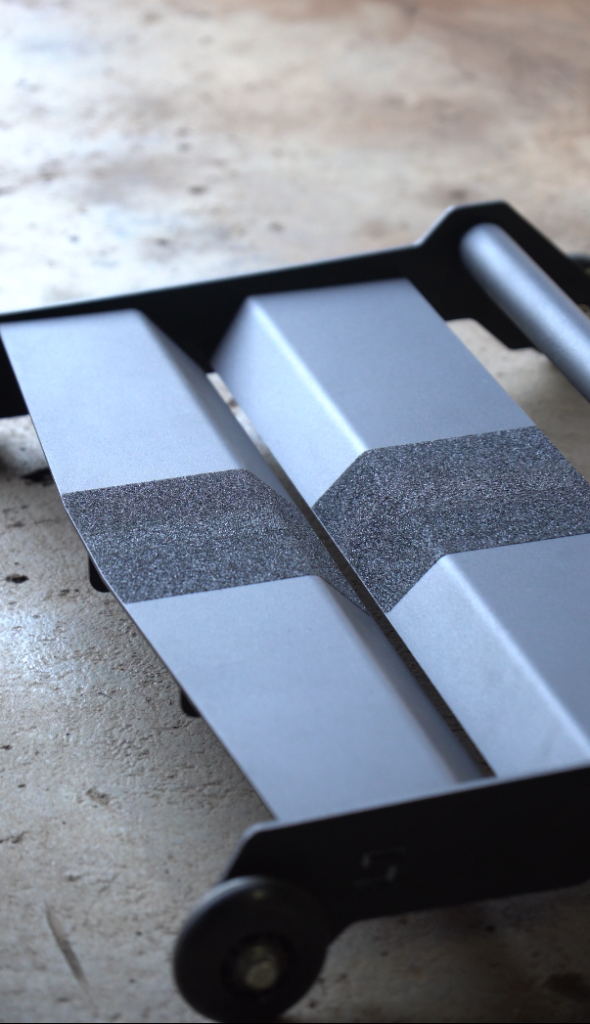
Some of those movements will feel more at home in the world of reformers and studio apparatus than in the world of fixed gym machines. That is part of what makes the Arcline useful. It brings a different kind of movement into a strength setup.
Where the idea comes from
The glute ham roller has been around for a while.
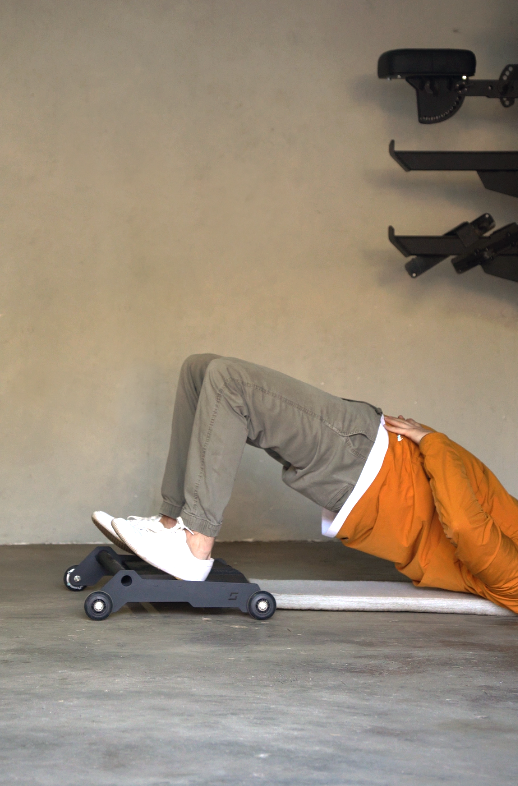
It became popular as a compact way to train the posterior chain, especially in spaces where a full glute ham developer would be too large or too expensive. It gave people a simpler way to do hamstring-focused work, bodyweight leg curl variations, and exercises that sat somewhere between a Nordic curl and a glute ham raise.
That simplicity made it useful.
It also kept it fairly narrow.
Most glute ham rollers are mainly used for a small group of exercises. The Arcline takes that basic idea and opens it up.
What makes the Arcline different
At its simplest, the Arcline can still be used for glute ham roller-style work.
But that is only one part of it.
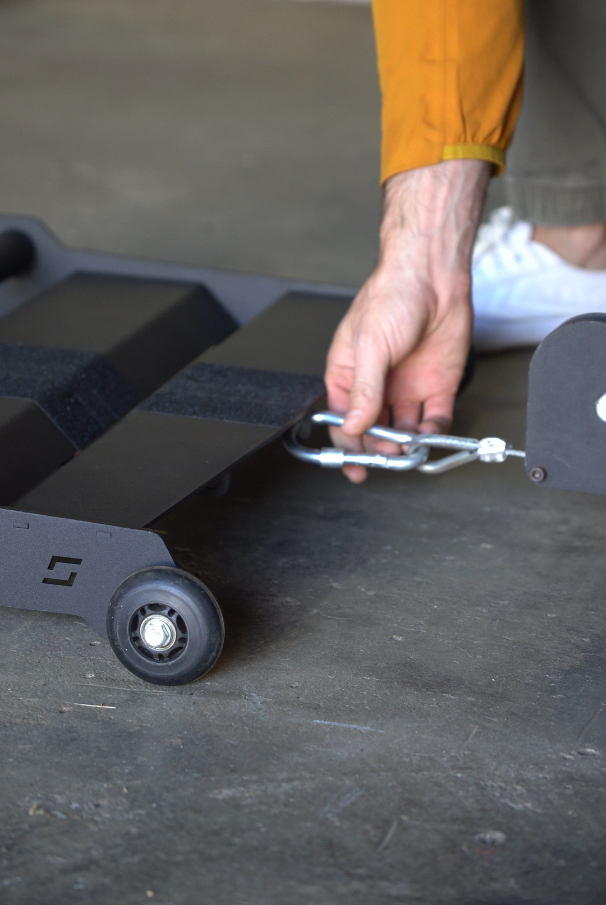
Once paired with cable resistance, it becomes a broader training tool. It can assist movement into position, add load through range, and make certain exercises smoother and more controllable. That changes the role of the product. It is no longer just a roller for one category of exercise. It becomes something you can use across different kinds of training.
Glute ham roller work
The most obvious use for the Arcline is still posterior-chain training.
Hamstring curls, glute ham roller variations, and other lower-body exercises are a natural fit. For people who want a compact way to train those patterns, the Arcline already makes sense.
But it does not stop there.
Split training and end-range work
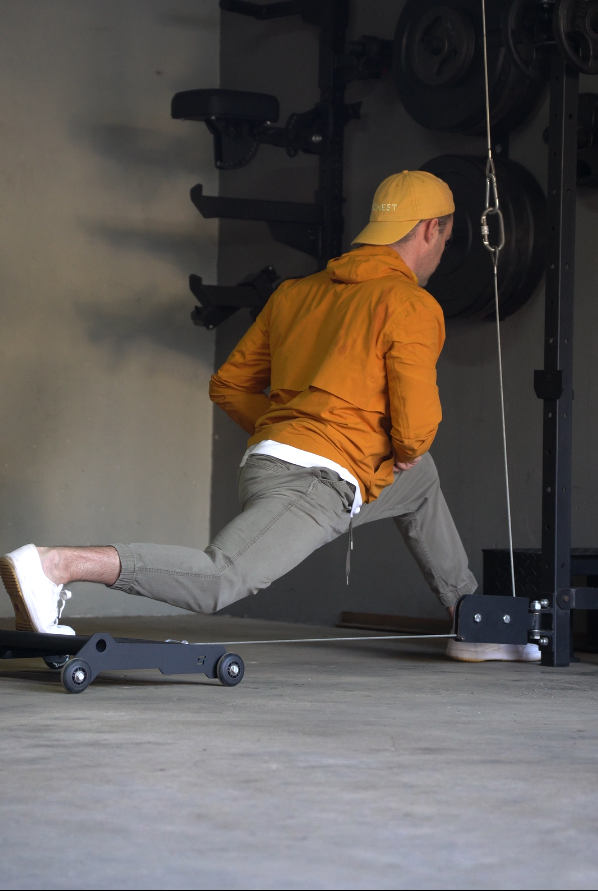
One of the more interesting uses of the Arcline is in front splits and middle splits.
These positions usually need two things: support and strength.
Many people can reach a position passively, but do not yet have much control there. Others need assistance to work into the position without forcing it. The Arcline helps with both.
When paired with the HiLo Glider, it can help assist the body into a deeper lengthened position. It can also help load that same position, so the range is not only stretched but trained.
That is important.
The goal is not only to reach a split. It is to build strength and control there.
Movement that feels different
The Arcline also introduces movement patterns that are not typical of standard gym equipment.
Some exercises can be rolled, guided, supported, or lengthened in a way that feels more like apparatus-based training. That is where the reformer comparison starts to make sense.
It is not a reformer replacement.
But it does open up some of the same qualities: smoother resistance, more guided movement, and better support through positions that are hard to train with ordinary gym equipment alone.
A useful accessory work tool
This is where the Arcline may end up being most useful for many people.
Not every product needs to be understood through its most niche use. The Arcline is also a very practical accessory work tool.
Accessory training often benefits from better positioning, smoother resistance, and more control. The Arcline helps create that. It can broaden the kind of supporting work a cable setup allows, especially when you want something more controlled than a basic handle or strap setup.
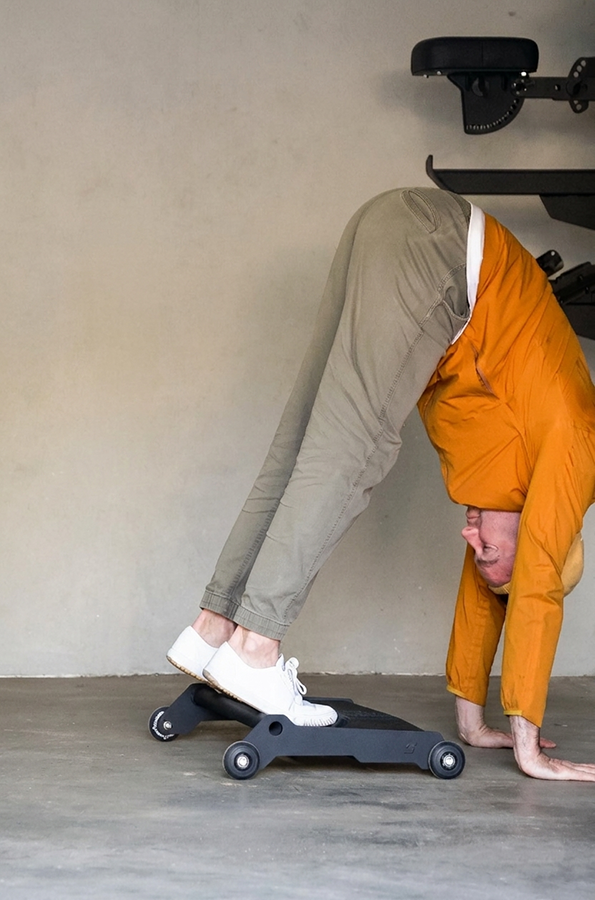
That means the Arcline is not only for hamstrings, and not only for splits.
It can also support a wider range of smaller, supported, and more precise training work.
Who it is for
The Arcline will appeal to people who want more from a cable setup.
That may include people interested in posterior-chain training, front splits, middle splits, or more reformer-like movement patterns. It can also appeal to users who simply want better accessory exercise options from their rack, single-column setup, or selectorised cable machine.
In that sense, the Arcline is broad.
It can serve as a hamstring tool, an end-range training tool, and an accessory work tool, depending on how it is used.
Closing
The Arcline starts with a familiar idea: a roller-based tool for glute ham-style training.
But paired with cable resistance, it becomes something more useful than that description suggests.
It can support posterior-chain work, help train front and middle splits, and open up movement patterns that are rarely associated with standard gym equipment. That makes it a broad training tool rather than a narrow accessory.
The Arcline does not fit neatly into one category.
As the name suggests.

See how it fits into the HiLo Cable System here.